How Do I Record a Professional Customer Testimonial?
Can a Client Just Shoot It Themselves?
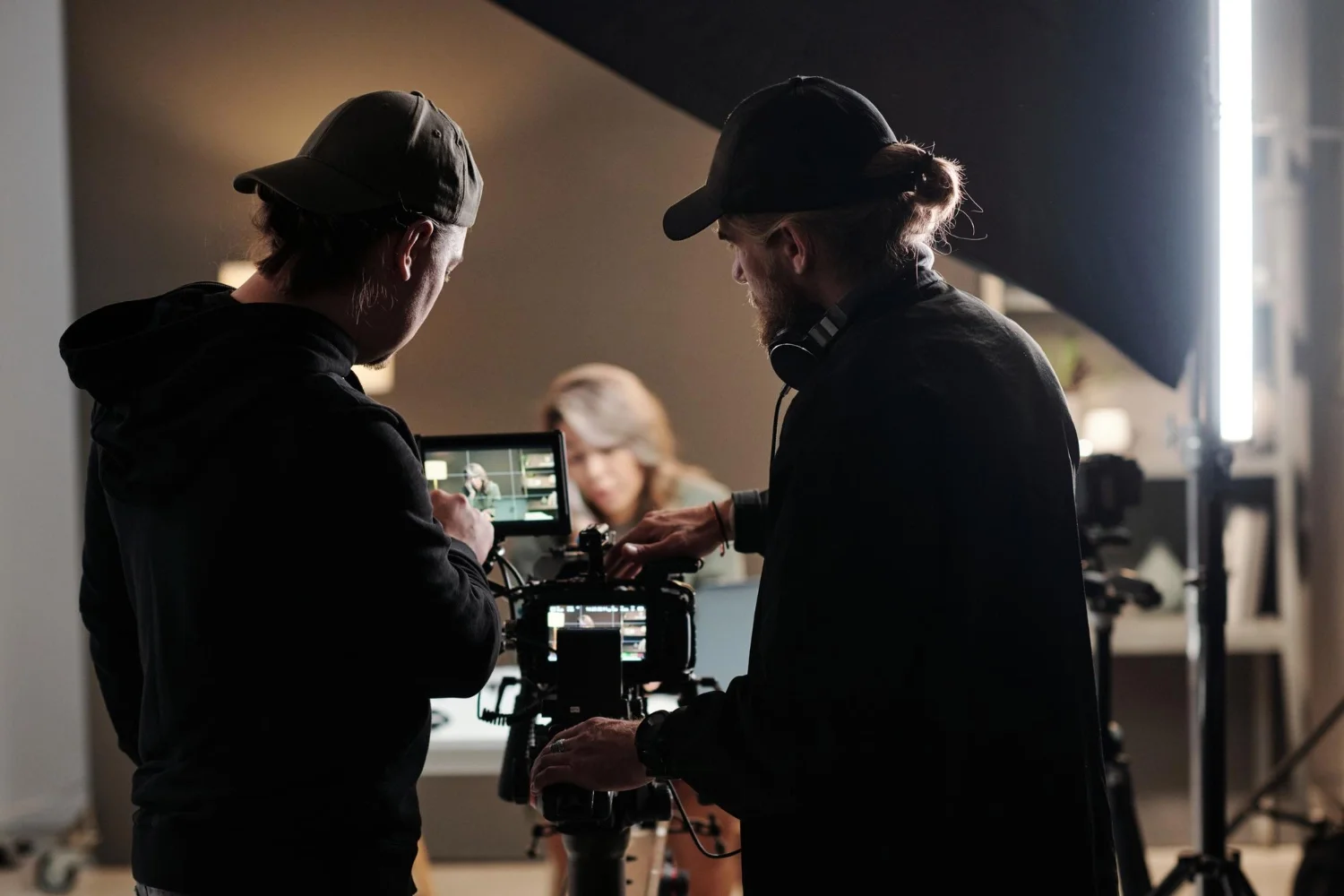
Sometimes, yes. If the quality is decent, a self-recorded testimonial works fine for a website or a social post. I have seen plenty of them do the job.
But a professionally recorded testimonial opens up more places to put it. Higher quality footage means you can run it as a paid ad, cut it for multiple platforms, or push it somewhere the production value actually gets judged. A phone video shot in an office with a window behind the subject caps what you can do with it. If you are weighing that against the budget, what a professionally produced business video actually costs covers the range and what drives it.
Why Quality Matters
We shoot ongoing testimonials for a local car dealership that run in movie theaters. Theater is the highest bar there is. The image is projected huge and the audio plays through a full theater system, so there is nowhere to hide a bad mic or a soft focus.
Those videos have brought the dealership a lot of new customers and have been part of why the business has done well. That only happens because the footage was good enough to run in that environment in the first place.
The Questions Are Important
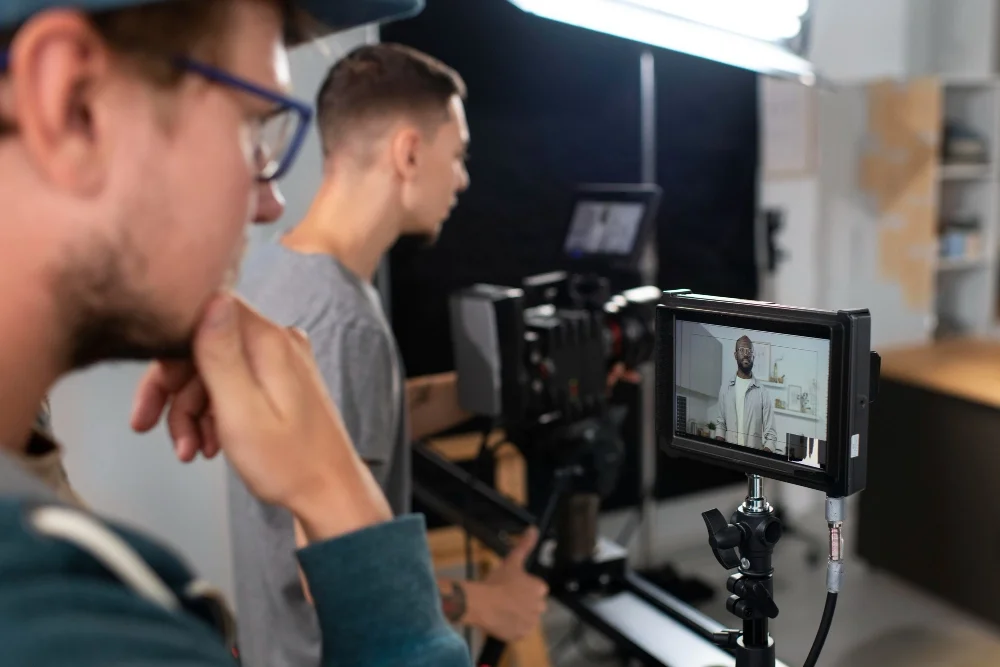
The biggest mistake is the questions. When a business writes the questions and coaches the customer through the answers, you can hear it. The whole thing sounds rehearsed, and viewers pick up on that immediately.
A testimonial only works when the answers are genuine. That is one of the real advantages of hiring a professional. A director knows how to ask a question in a way that gets a real answer instead of a recited one, and knows how to follow up when the first answer is too short or too stiff.
Our Setup
Cameras and Audio
We always shoot with two cameras and a boom mic. Two angles give you cut points in the edit, which is what lets you remove pauses and stumbles without a visible jump. Good audio is not optional. Audio is the part people notice when it is wrong.
Lighting and Composition
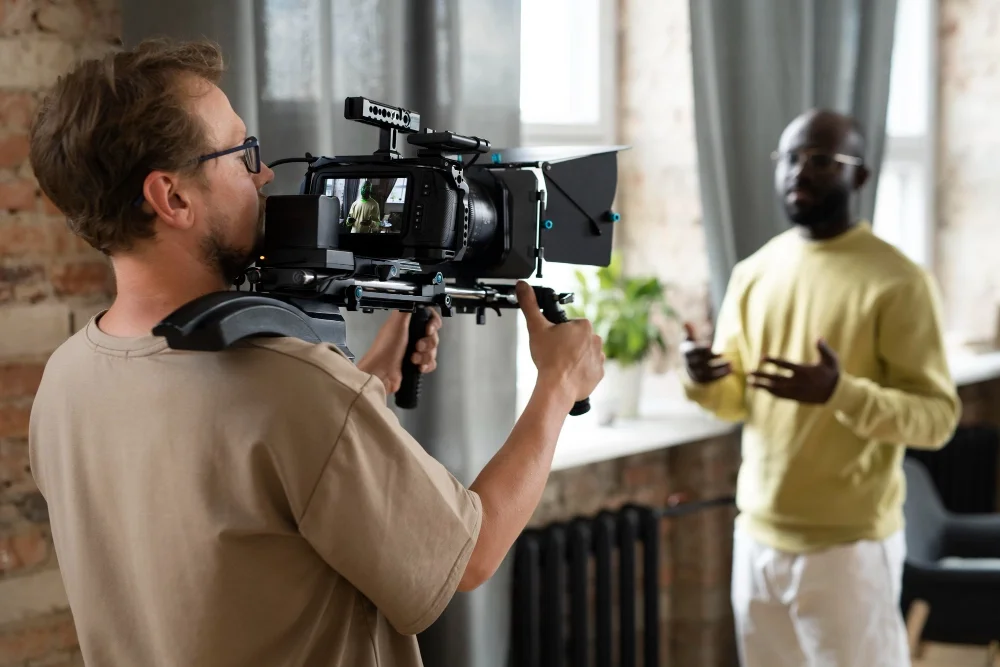
Standard key light and fill light setup. Nothing exotic. What matters more is composition. Where the subject sits in the frame, what is behind them, and how they are framed against that background is what makes it look professional instead of like an interview shot in a conference room.
Getting a Nervous Person to Relax
Most customers are not on camera for a living, and they tighten up the second you tell them you are rolling.
Here is what I do. I tell them we are not filming yet and that we are going to do a few run-throughs before we shoot for real. We are already rolling. Those run-through takes are almost always the good ones, because the person is relaxed and just talking. By the time somebody thinks they are "on," they have already given you the take you are going to use.
Editing
The edit is where a testimonial is made. We cut out pauses and any clip that does not reinforce the message. If a customer takes 40 seconds to say something but only 12 seconds are needed, I cut it that tight.
Then we crop for different social platforms. Vertical for the feeds that need it, horizontal for the site and for anything running as a pre-roll ad. Same interview, several deliverables.
Where to Put Them
Put them on a dedicated testimonial page on your site, and have more than one. A single testimonial reads like you found the one happy customer. Several of them, from different people, reads like a pattern.
When to Hire Someone
If the testimonial is going on a testimonial page and nowhere else, a decent self-shot video will get you there. If it is going to run as an ad, in a theater, on a trade show screen, or anywhere it sits next to other professionally produced work, hire a crew. The difference is not just the camera. It is the interviewer, the audio, and the edit. That same call comes up on every project, and when a bigger production budget is worth the money covers how to make it.
Key Takeaways
- Two cameras and a boom mic are the baseline for a professional testimonial. Audio is the first thing people notice when it is wrong.
- Key and fill lighting handles the basics, but composition is what makes the shot look professional.
- Coached or rehearsed answers are obvious to viewers. A skilled interviewer gets genuine ones.
- Tell nervous subjects you are doing run-throughs before you film. Roll anyway. Those takes are usually the best ones.
- Cut every pause and every clip that does not support the message, then crop for each platform.
- Build a testimonial page with more than one video. One testimonial looks cherry-picked.